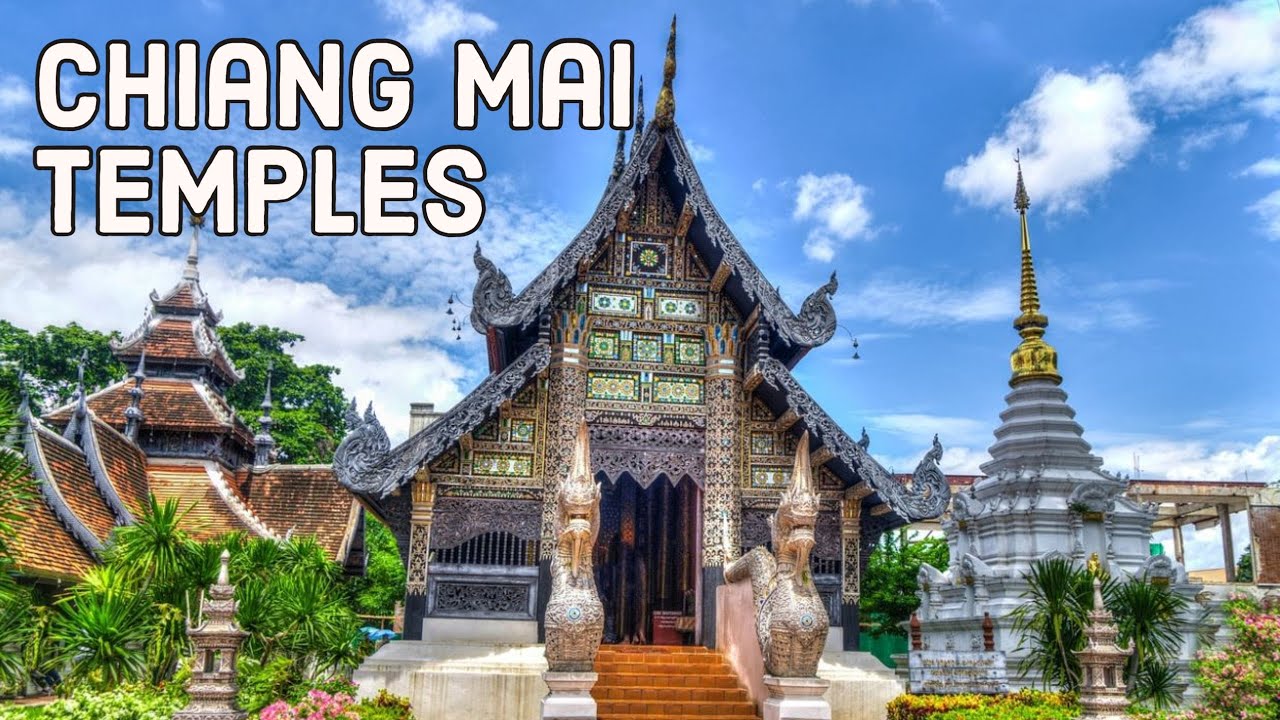
Chiang Mai, the cultural heart of Northern Thailand, is a city where spirituality permeates the air. Renowned for its serene atmosphere and rich history as the former capital of the Lanna Kingdom, it boasts an astonishing concentration of exquisite temples (“wats”). These sacred sites are far more than just places of worship; they are living museums, architectural wonders, and tranquil havens offering profound insights into Thai Buddhism and Lanna culture. Exploring these Temples In Chiang Mai is an essential, enriching experience for any visitor. This curated LIST showcases 12 of the finest Temples in Chiang Mai , each offering a unique perspective on the city’s spiritual and artistic soul. Prepare to be captivated by intricate carvings, gleaming chedis, serene Buddha images, and the palpable sense of peace.
Wat Phra Singh Woramahawihan
Nestled within the heart of Chiang Mai’s Old City, Wat Phra Singh stands as arguably the city’s most revered and active temple. Founded in the 14th century, its importance is undeniable. The temple complex houses the highly venerated Phra Singh Buddha image (Lion Buddha), enshrined within the elegant Wihan Lai Kham. This smaller viharn is a masterpiece of classic Lanna architecture, featuring exquisite gold stencil patterns on red lacquer walls depicting Jataka tales and northern Thai life. The main ubosot (ordination hall) is equally impressive with its intricate multi-tiered roofs and majestic Naga serpents guarding the entrance. The large golden chedi behind the ubosot is a significant landmark. Witnessing monks chant, devotees make offerings (“tham bun”), and the general buzz of respectful activity makes Wat Phra Singh a vibrant and essential stop on any temple LIST in Chiang Mai. Its central location makes it easily accessible.
Wat Chedi Luang Worawihan
Dominating the Old City skyline, Wat Chedi Luang is a site of immense historical significance and awe-inspiring scale, albeit partially ruined. Its colossal chedi (stupa), originally constructed between 1385 and 1402, once soared to nearly 90 metres, making it one of the tallest structures in ancient Lanna. Severely damaged by an earthquake in 1545, the chedi remains a breathtaking sight, its massive brick base adorned with intricate elephant buttresses. Within the temple grounds stands the magnificent City Pillar Shrine (Lak Mueang), a sacred symbol of Chiang Mai’s spirit and protector. Another highlight is the impressive, recently reconstructed viharn with its soaring roof and large standing Buddha image. Wat Chedi Luang offers a tangible connection to the city’s powerful past. Don’t miss the daily Monk Chat programme held here, offering unique cultural exchange.
Wat Phra That Doi Suthep
Perched dramatically on Doi Suthep mountain overlooking the city, Wat Phra That Doi Suthep is Chiang Mai’s most iconic and spiritually significant temple. The journey itself is part of the experience, culminating in climbing the 306-step Naga staircase (or taking the funicular). Legend states the temple’s location was chosen by a sacred white elephant carrying a relic of the Buddha. The centrepiece is the stunning golden chedi, enshrining the relic and shimmering brilliantly against the mountain backdrop. The terrace surrounding the chedi offers panoramic views of Chiang Mai far below, especially breathtaking at sunrise or sunset. Intricate murals, shrines, bells, and statues fill the upper courtyard. The atmosphere is one of profound reverence and pilgrimage. Visiting this mountaintop sanctuary is an absolute must on any itinerary of Temples In Chiang Mai, providing both spiritual uplift and spectacular vistas.
Wat Umong Suan Phutthatham
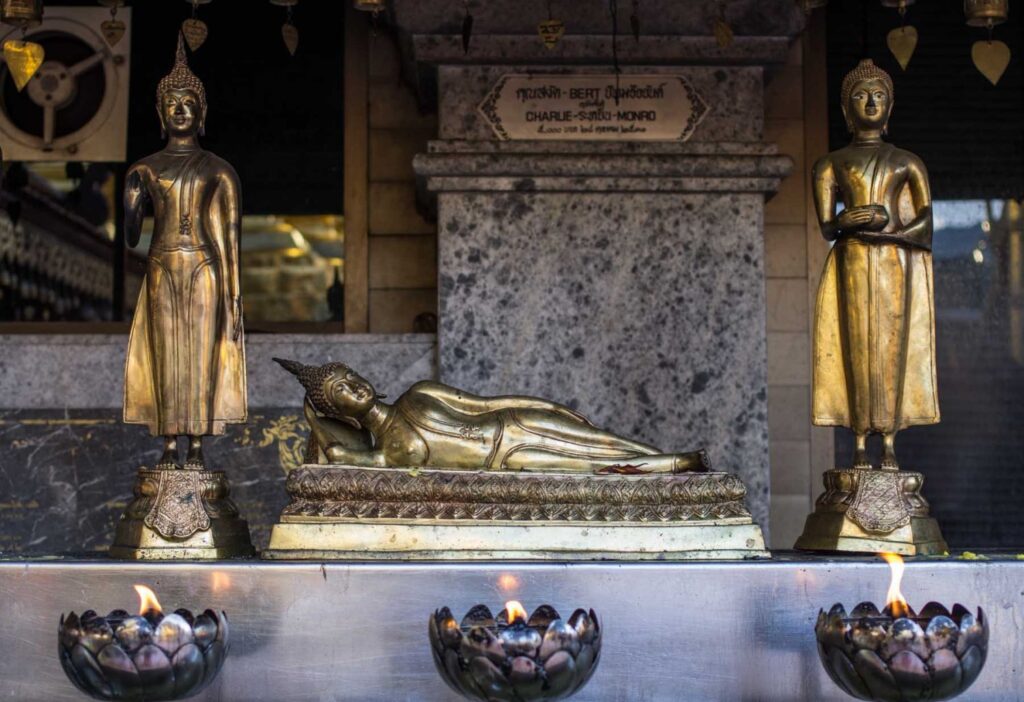
Offering a completely different temple experience, Wat Umong is a unique forest temple located on the city’s outskirts. Founded in the 14th century, it’s famed for its ancient network of brick tunnels (“umong” means tunnels) built beneath a large chedi. These atmospheric, dimly lit passageways contain niche shrines with Buddha images and were historically used for meditation and teaching, providing cool respite. Above ground, the sprawling, wooded grounds feel more like a peaceful park, dotted with crumbling chedis, meditation halls (“kuti”), and a large, tranquil pond where visitors can feed catfish and turtles. Signs with Buddhist teachings in English and Thai are found throughout. The temple actively promotes meditation and Dhamma study, offering a serene escape from the urban bustle. Wat Umong’s unique historical setting and focus on contemplation make it a fascinating inclusion on this LIST.
Wat Suan Dok
Translating to “Flower Garden Temple,” Wat Suan Dok presents a striking visual spectacle, particularly striking in the late afternoon light. Located just west of the Old City moat, it was established in the 14th century as a royal garden retreat. Its most distinctive feature is the large, open-air field containing rows of gleaming white mausoleums. These house the cremated ashes of the Chiang Mai royal family. Alongside stands a majestic, large central golden chedi believed to contain a relic of the Buddha. The main viharn is impressive, housing a large bronze Buddha image cast in 1504. Wat Suan Dok is also home to Mahachulalongkornrajavidyalaya University, a major centre for Buddhist studies, often hosting Monk Chat programmes. Its unique blend of royal history, striking architecture, and active monastic life makes it a key destination among Temples In Chiang Mai.
Wat Lok Molee
Situated just north of the Old City moat, Wat Lok Molee boasts a sense of ancient grandeur. Its history stretches back to the 14th century, with significant royal patronage from the Mangrai dynasty. The temple’s most imposing feature is its massive, six-tiered laterite chedi, a classic example of early Lanna architecture. While the top section is a later addition, the base remains powerfully evocative. The beautifully restored main viharn features intricate woodcarving on its gables and doors, and houses significant Buddha images. Unlike many temples crowded within the walls, Wat Lok Molee offers more spacious grounds, allowing visitors to appreciate the scale and craftsmanship of its structures fully. Its location near popular accommodation areas like the North Gate makes it a convenient yet historically rich stop on a tour of Chiang Mai’s sacred sites.
Wat Chiang Man
Holding the esteemed title of Chiang Mai’s oldest temple, Wat Chiang Man resides within the northeastern corner of the Old City. Founded by King Mangrai himself in 1296 when he established the city, it served as his residence during construction. This temple houses two exceptionally revered and ancient Buddha images: the Phra Sila (a marble bas-relief Buddha) and the tiny Phra Kaeo Khao (Crystal Buddha), both believed to possess protective powers, especially against natural disasters. The main viharn is relatively modern but elegant. The temple’s most photogenic structure is the unique chedi, named Chedi Chang Lom (Elephant Chedi), featuring a base encircled by fifteen life-sized brick-and-stucco elephants seemingly emerging from the structure, symbolising support and strength. Wat Chiang Man is a cornerstone of Lanna heritage.
Wat Phra That Doi Kham (Temple of the Golden Mountain)
Often overshadowed by its famous neighbour Doi Suthep, Wat Phra That Doi Kham offers a rewarding experience with fewer crowds and stunning views. Located south of the city centre, its name means “Temple of the Golden Mountain.” The journey involves a winding road and a climb up a long Naga staircase. The focal point is a large, golden seated Buddha image visible from afar, constructed relatively recently. However, the temple’s origins are ancient, dating back to the 7th century, and it houses a significant relic chedi. The main viharn features beautiful modern murals depicting the Buddha’s life. The panoramic views over Chiang Mai and the surrounding plains are exceptional, rivalling Doi Suthep. Wat Phra That Doi Kham provides a more local pilgrimage atmosphere and is a superb addition to any LIST exploring mountain Temples In Chiang Mai.
Wat Sri Suphan (Silver Temple)
Located just south of the Old City walls, near the Saturday Walking Street market, Wat Sri Suphan offers a truly unique and dazzling spectacle: it is famously covered in intricate silver, aluminium, and zinc alloy repoussé work. While the main ubosot is the most stunning example, shimmering with elaborate mythological motifs, Naga serpents, and Buddhist symbols, the artistry extends to surrounding pavilions and even the ordination hall’s interior. The temple is a centre for traditional Lanna silver craftsmanship, and workshops often operate on-site. Note that the main ubosot is traditionally restricted to men only due to its sacred nature as an ordination hall, but the exterior and other buildings are accessible to all. Wat Sri Suphan is a breathtaking example of contemporary Lanna artistry applied to sacred architecture, making it unmissable.
Wat Chet Lin
Offering a charming and peaceful respite within the bustling city, Wat Chet Lin is a lesser-known gem located near Huay Kaew Road, en route to Doi Suthep. Its name translates to “Seven Pools Temple,” hinting at its watery origins. While the pools are less prominent now, the temple retains a delightful, almost village-like atmosphere. The main attraction is its beautifully proportioned and well-preserved Lanna-style chedi, painted white with golden accents. The surrounding viharns and buildings feature classic Lanna architectural elements – multi-tiered roofs, Naga bargeboards – in a more intimate setting. The grounds are well-tended and tranquil, often filled with the sounds of chanting or temple bells. Wat Chet Lin provides an authentic glimpse of local temple life away from the main tourist circuit, a serene stop on your exploration.
Wat Buppharam
Situated within the Old City, not far from Tha Phae Gate, Wat Buppharam is a vibrant temple often nicknamed the “Flower Ornament Temple” due to its colourful and ornate decorations. Originally founded in the 15th century, much of its current structure reflects significant Burmese (Shan) influence from renovations in the late 19th century. This is most evident in the elaborately carved and gilded teak woodwork adorning the main viharn’s facade, doors, and windows, featuring intricate floral patterns and mythical creatures. The relatively small but stunning main viharn contrasts beautifully with the large, white-washed Lanna-style chedi behind it. Wat Buppharam is a delightful fusion of Lanna and Burmese artistic styles, creating a visually rich and photogenic sanctuary right in the city centre, easily included on any walking tour.
Wat Pha Lat (The Monk’s Trail Temple)
Nestled halfway up the forested slopes of Doi Suthep, Wat Pha Lat offers a uniquely mystical and serene experience, distinct from the grandeur of Doi Suthep temple above it. Historically, it served as a resting point for pilgrims travelling to Doi Suthep on foot. Accessible via the scenic (and popular) Monk’s Trail hike starting near Chiang Mai University, or by road, the temple feels wonderfully secluded. Its structures blend harmoniously with the natural surroundings – moss-covered statues, stone chedis, pavilions perched over boulders and a cascading stream. The atmosphere is profoundly peaceful, ideal for quiet contemplation. Intricate stone carvings depicting mythological scenes and Buddhist imagery are scattered throughout the jungle-like grounds. Wat Pha Lat provides a magical, otherworldly temple experience deeply connected to nature, a perfect culmination to our LIST.
This exploration of 12 remarkable Temples In Chiang Mai merely scratches the surface of the city’s profound spiritual and architectural heritage. Each temple on this LIST offers a distinct window into the soul of the Lanna Kingdom – from the majestic and iconic Wat Phra Singh and Doi Suthep to the unique atmospheres of Wat Umong’s tunnels and Wat Pha Lat’s jungle sanctuary. The intricate craftsmanship of Wat Sri Suphan, the ancient power of Wat Chedi Luang, and the serene beauty of Wat Suan Dok all contribute to the rich tapestry. Whether seeking historical insight, artistic inspiration, spiritual solace, or simply breathtaking beauty, Chiang Mai’s temples deliver an unforgettable experience. Remember to dress respectfully (covering shoulders and knees), remove shoes before entering buildings, and observe quiet reverence. Exploring these sacred spaces is not just sightseeing; it’s an immersion into the living heart of Northern Thai culture. Let this LIST be your guide to discovering the timeless treasures that define Chiang Mai.