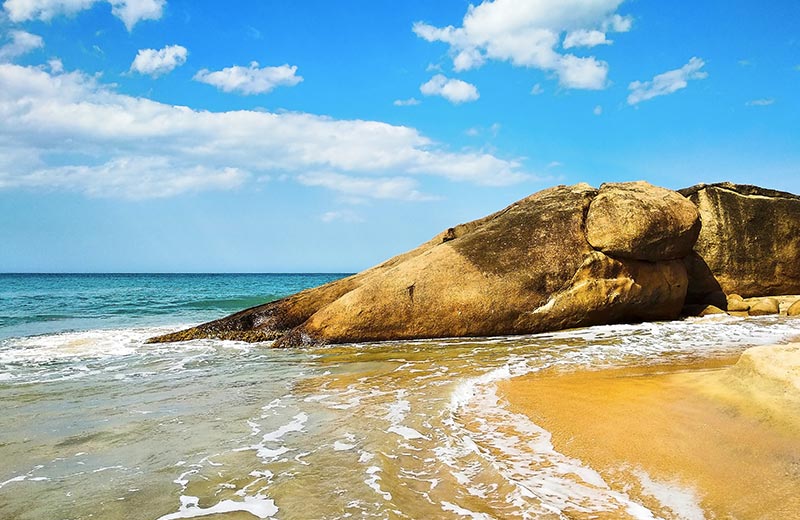
Nestled along the sun-drenched, wildlife-rich east coast of Sri Lanka, Arugam Bay (often affectionately shortened to “Arugam” or “A-Bay”) has evolved from a sleepy fishing village into a globally renowned surfing mecca. Revered for its consistent, warm-water point breaks, laid-back vibe, and stunning natural surroundings, it offers an unparalleled surfing experience. This definitive guide delves deep into the heart of Arugam Bay surfing spots, exploring its iconic breaks, seasonal rhythms, unique culture, and essential practicalities, establishing itself as the authoritative resource for wave seekers planning their Sri Lankan surf odyssey.
Situated in the Ampara District of Sri Lanka’s Eastern Province, Arugam Bay curves around a natural bay facing the Indian Ocean. Its geographical position is crucial, perfectly angled to harness swells generated in the Southern Ocean and funneled through the Bay of Bengal.
While surf exploration began in the 1960s and 70s, Arugam Bay truly gained international prominence in the 1980s and 90s. Its reputation grew through surf travelogues and word-of-mouth, celebrated for its uncrowded perfection (a relative term today, but still less hectic than many global spots) and exotic location.
II. Decoding the Arugam Bay Surf Season: Swell, Wind & Monsoon Magic
Understanding the seasonal patterns is paramount for planning a successful surf trip to Arugam Bay. Its seasonality is dictated by the powerful Asian Monsoon system.
-
Prime Surf Season (April/May – October):
-
Swell Generation: The key driver is the southwest monsoon (Yala season). While this monsoon brings rain to Sri Lanka’s west and south coasts, it generates powerful southwesterly groundswells in the distant Southern Ocean. These long-period swells travel thousands of kilometres, refracting and wrapping perfectly into Arugam Bay’s points.
-
Local Conditions: During the main season (typically peaking May-September), the east coast experiences its driest, sunniest weather. Prevailing winds are cross-shore or light offshore in the mornings (from the west/northwest), often turning onshore (easterly) by afternoon. Early mornings usually offer the cleanest conditions.
-
Consistency: This season offers remarkable consistency, with rideable surf occurring frequently. Size can range from fun 2-3ft (beginner/intermediate friendly) to powerful overhead and double-overhead days (for experienced surfers) when major swells hit.
-
-
Shoulder Seasons (March/April & October/November): Transition periods offering potentially excellent, less crowded sessions. Swell consistency decreases compared to peak season, but quality waves are still highly likely. Weather can be more variable, with a higher chance of rain, especially in November (onset of the northeast monsoon – Maha season).
-
Off-Season (November – March):
-
Northeast Monsoon Dominance: The northeast monsoon brings rainfall and strong onshore winds to the east coast, severely degrading surf quality in Arugam Bay. Swell direction (northeasterly) is generally unfavourable for the main points.
-
Alternative Options: Some sheltered corners might offer tiny waves, but surfing is not the primary activity. This is a time for cultural exploration, safaris, relaxation, and witnessing the bay’s quieter, local life. Some surf camps and guesthouses close during this period.
-
Arugam Bay Surfing Spots:
The beauty of Arugam lies in its variety of waves catering to different skill levels, all within relatively easy reach. Here’s an in-depth look at the key spots:
-
Main Point (Arugam Bay Point):
-
The Crown Jewel: This is the wave that put Arugam Bay on the map. A long, peeling right-hand point break, arguably one of the best in Asia, running over a predominantly sandy bottom with some reef sections.
-
Wave Characteristics: Offers rides ranging from 100m to well over 500m on epic days. Starts with a take-off section that can be punchy, opening into a long, fast wall perfect for carving, cutbacks, and flowing turns. Handles size well, becoming more powerful and hollow on bigger swells. The inside section (nearer the river mouth) is often mellower.
-
Suitability: Intermediate to advanced surfers. Requires paddling strength, wave reading skills, and etiquette awareness due to crowds, especially at the main take-off peak. Beginners can struggle with the paddle out and initial drop.
-
Access: Directly in front of the village. Paddle out from the beach near the main surf shops/stations or via the lagoon mouth channel (requires local knowledge of tides and currents). Boat shuttles often run from the beach to the main take-off zone.
-
-
Pottuvil Point (P-Point):
-
The Powerful Alternative: Located approximately 2km south of Main Point, near the town of Pottuvil. A more intense, hollow right-hand reef/rock point break.
-
Wave Characteristics: Generally shorter but more powerful and barreling than Main Point, especially on mid-to-high tide. Faster take-off leading into a steep, critical wall and often a hollow section. Demands commitment and precise positioning. Less forgiving than Main Point.
-
Suitability: Advanced surfers only. Requires experience in powerful, hollow waves and strong current management. Crowds are usually thinner but more experienced.
-
Access: Reachable by tuk-tuk or scooter from Arugam Bay. Paddle out from the rocky beach. Strong currents are common.
-
-
Whiskey Point (Crocodile Rock):
-
The User-Friendly Point: Situated about 5km north of Main Point, near the Komari road. A long, mellow right-hand point break over a rock and sand bottom.
-
Wave Characteristics: Offers long, cruisy rides, generally slower and less steep than Main Point. Perfect for longboarders, beginners progressing from Baby Point, intermediates, and those seeking a less intense session. Rarely gets hollow, but provides ample opportunity for trimming and practising turns. Can get crowded with learners and longboard schools.
-
Suitability: Beginner (once competent catching unbroken waves), intermediate, longboarders. Excellent learning ground beyond the whitewater.
-
Access: Easily reached by tuk-tuk or scooter. Paddle out from the sandy beach.
-
-
Baby Point:
-
The Learning Ground: Located right in front of many popular guesthouses and surf camps, just south of Main Point (around the first headland).
-
Wave Characteristics: A sheltered, sandy-bottomed bay offering small, gentle rolling waves – predominantly lefts and rights. Primarily a whitewater wave ideal for absolute beginners learning to pop up and ride straight. Becomes mushy and inconsistent when Main Point gets big.
-
Suitability: Absolute beginners and young children. Surf schools heavily utilise this spot.
-
Access: Directly from the beach in front of the main accommodation strip.
-
-
Peanut Farm:
-
The Remote Gem: Located approximately 8-10km south of Main Point, near the entrance to Kumana National Park. A long, often less crowded left-hand point break.
-
Wave Characteristics: A more fickle wave requiring a specific swell direction (more southerly) and tide. When it works, it offers long, fun left-hand walls, sometimes with barrel sections. Can be faster and hollower than Whiskey Point. A great option when Main Point is overly crowded or wind-affected.
-
Suitability: Intermediate to advanced surfers. The remote location means fewer crowds but also fewer facilities.
-
Access: Requires a tuk-tuk, scooter, or 4×4 journey along a sandy track. Paddle out from the beach. Check access conditions locally.
-
-
Elephant Rock (Okanda):
-
The Adventure Wave: Located significantly further south (approx. 30-40km), near the Okanda Temple and the entrance to Kumana National Park. A powerful, world-class right-hand point break breaking over a shallow reef.
-
Wave Characteristics: Demanding and heavy. Offers long, incredibly fast, barrelling walls on its day. Requires a solid swell and favourable winds. Not for the faint-hearted due to its power, shallow reef, and remoteness. Crowds are usually minimal but highly skilled.
-
Suitability: Expert surfers only. Requires exceptional fitness, wave knowledge, and comfort in heavy, shallow reef breaks.
-
Access: A significant journey via often rough roads, best undertaken by 4×4 or organised trip. Remote location with limited facilities. Respect the sacred nature of the nearby temple site.
-
Navigating the Arugam Bay Surf Scene
-
Getting There & Around:
-
Air: The nearest major airport is Bandaranaike International Airport (CMB) near Colombo. From Colombo, options include:
-
Domestic Flight: To Ampara (SLAF Ampara) or Batticaloa (BTC), followed by road (approx. 1-2 hours).
-
Road: Private taxi/minivan (6-8 hours), air-conditioned bus (8-10+ hours via Monaragala or Buttala), or train + bus combo (to Batticaloa then bus).
-
-
Local Transport: Tuk-tuks are ubiquitous and affordable for short trips. Renting a scooter offers flexibility for exploring spots like Whiskey Point, Pottuvil Point, and Peanut Farm (ensure you have an international driving permit and wear a helmet!). Bicycles are also popular for getting around the village itself.
-
-
Accommodation: Ranges from basic guesthouses and surfer lodges to boutique hotels and higher-end villas. Most budget and mid-range options are clustered near Main Point and Baby Point. Booking ahead is highly recommended during peak season (May-September).
-
Surf Services:
-
Surfboard Hire: Numerous shops offer a wide range of boards (soft tops, funboards, shortboards, longboards) for daily or weekly rates. Quality varies.
-
Surfboard Repair: Essential services available from skilled local technicians.
-
Surf Lessons & Guiding: Reputable surf schools cater to all levels. Experienced local guides are invaluable for finding the best spots on the day, boat trips to the Main Point take-off, and trips to more remote breaks like Peanut Farm or Elephant Rock.
-
Boat Shuttles: Widely used to access the Main Point take-off zone, saving energy for surfing.
-
-
The Vibe & Culture:
-
Laid-Back Charm: Despite its growth, Arugam Bay retains a distinctly relaxed, bohemian atmosphere compared to major western surf hubs. The pace is slow, and the dress code is decidedly casual (boardshorts/bikinis, sarongs, flip-flops).
-
International Melting Pot: Attracts a diverse crowd of surf travellers from across the globe, alongside a growing contingent of domestic tourists. Expect a friendly, communal feel.
-
Local Community: The Muslim fishing community forms the backbone of the local population. Respecting local customs and dress, especially away from the immediate beachfront and in Pottuvil town, is crucial. Learning a few Sinhala or Tamil phrases is appreciated.
-
Surf Etiquette: As with any world-class wave, Main Point can get crowded. Respect the lineup, adhere to surfing priority rules (the surfer deepest to the peak has right of way), avoid snake-dropping, and be mindful of your impact. Localism is minimal but respect is paramount. Patience and politeness go a long way.
-
-
Food & Refreshment: Abundant options catering to surfers: local “kades” (small eateries) serving delicious rice and curry, rotis, and hoppers; fresh seafood grills; and numerous cafes and restaurants offering Western breakfasts, smoothie bowls, pizzas, pasta, and international fare. Fresh fruit (mangoes, pineapple, bananas) and juices are plentiful. Tap water is unsafe; drink bottled or filtered water.
Sustainable Surfing in Arugam Bay
The fragile beauty of Arugam Bay and its dependence on healthy ecosystems necessitate responsible tourism.
-
Waste Management: Plastic pollution is a significant challenge. Minimise single-use plastics. Use refillable water bottles (many guesthouses offer filtered water refills). Dispose of rubbish responsibly in designated bins. Participate in beach clean-ups if possible.
-
Water Usage: Water scarcity can be an issue, especially in the dry season. Be mindful of consumption – take shorter showers, report leaks.
-
Respecting Wildlife: The bay borders lagoons and national parks. Observe wildlife respectfully from a distance. Do not feed monkeys. Be croc-wise near lagoon mouths and rivers, especially at dawn/dusk. Turtles occasionally nest on local beaches – avoid disturbing nests or hatchlings.
-
Coral Reefs: Avoid standing on or damaging coral reefs (especially relevant at spots like Pottuvil Point and Elephant Rock). Use reef-safe sunscreen.
-
Supporting the Local Economy: Choose locally-owned guesthouses, surf schools, eateries, and shops. Hire local guides. Fair compensation helps ensure tourism benefits the community directly.
-
Organisations: Support or learn about local initiatives focused on conservation, waste management, and community development (e.g., initiatives like Arugam Bay Surf & Rescue, local environmental groups).
Planning Your Arugam Bay Surf Trip: Key Considerations
-
Skill Level: Honestly assess your ability. Main Point is not ideal for true beginners. Baby Point and Whiskey Point offer better learning environments. Advanced surfers can seek out Pottuvil Point, Peanut Farm, and Elephant Rock.
-
Timing: Target April/May to October for the best chance of consistent surf and good weather. Peak months (July-August) offer the most reliable swell but also the biggest crowds. Shoulder months (April, May, September, October) offer a great balance.
-
Trip Duration: Allow at least 7-10 days to experience different breaks and conditions, allowing for potential flat spells. Longer stays allow for deeper immersion.
-
Equipment: Bring your preferred boards if possible, especially if you have specific requirements. Quality hire is available but bringing your own ensures familiarity. Consider a good-quality reef booties for reef breaks (P-Point, Elephant Rock). Essential spares (leash, fins, wax) are wise.
-
Health & Safety:
-
Travel Insurance: Comprehensive insurance covering surfing, medical evacuation, and theft is non-negotiable.
-
Vaccinations & Health: Consult your GP or travel clinic well in advance. Ensure standard vaccinations are up-to-date. Consider Hepatitis A & B, Typhoid. Malaria risk is generally low but dengue fever is present – use strong mosquito repellent.
-
Sun Protection: The equatorial sun is intense. High-SPF waterproof sunscreen, rash vests, hats, and sunglasses are essential.
-
Ocean Safety: Be aware of currents, especially at points and river mouths. Understand rip currents. Respect local knowledge regarding crocodile presence near lagoons. Surf with a buddy. Know basic first aid.
-
-
Visas: Ensure you have the correct Electronic Travel Authorisation (ETA) or visa for Sri Lanka before arrival.
Beyond Surfing:
While surfing is the primary draw, Arugam Bay serves as a gateway to Kumana National Park (Yala East) for wildlife safaris (elephants, leopards, birds), lagoon boat trips, ancient Buddhist sites like Muhudu Maha Viharaya, and simply soaking in the unique East Coast atmosphere distinct from Sri Lanka’s more developed west and south.
Arugam Bay is more than just a collection of world-class point breaks; it’s an experience, a culture, and a way of life distilled into a stunning stretch of Sri Lankan coastline. From the marathon walls of Main Point to the beginner-friendly rollers at Baby Point, the powerful tubes of Pottuvil to the adventurous journey to Elephant Rock, it offers waves to ignite the passion of every surfer. Its unique blend of reliable warm-water surf, a genuinely laid-back atmosphere, rich local culture, and access to incredible wildlife creates an intoxicating allure. By visiting with respect for the waves, the environment, and the local community, surfers can ensure that Arugam Bay retains its magic as Sri Lanka’s premier surfing sanctuary for generations to come. Embrace the rhythm of the east coast, chase those long right-handers, and discover why Arugam Bay continues to capture the hearts of surf travellers worldwide.