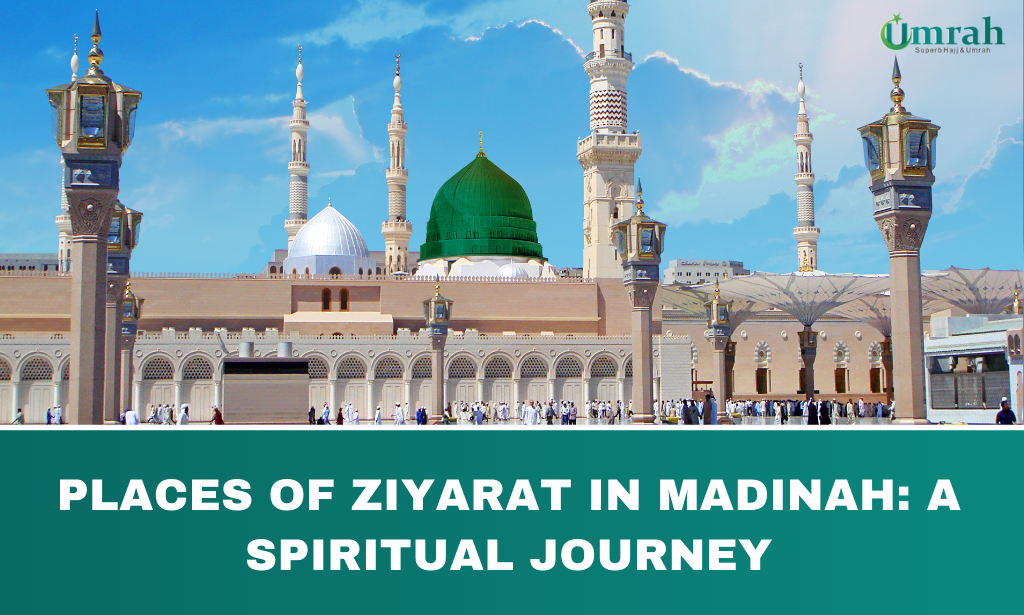
Madinah, the radiant city of Prophet Muhammad (PBUH), offers profound spiritual experiences beyond Umrah rituals. Visiting its sacred sites connects pilgrims to Islamic history and the Prophet’s legacy. This guide details 19 essential places to visit in Madinah during Umrah, each holding unique historical and religious significance. From iconic mosques to battlefields and blessed wells, these locations illuminate the foundations of Islam. Pilgrims gain deeper understanding by performing ziyarat (devotional visits) while reflecting on sacrifices that shaped Muslim heritage. We explore each site’s background, virtues, and practical visitation insights to enrich your spiritual journey.
Al-Masjid an-Nabawi (The Prophet’s Mosque)
The spiritual heart of Madinah and Islam’s second-holiest site, built by Prophet Muhammad (PBUH) in 622 CE. Houses the Prophet’s (PBUH) tomb under the Green Dome and the sacred Rawdah area where prayers are exceptionally accepted. The current structure spans over 400,000m² with 10 minarets, accommodating 1.5 million worshippers. Key features include the original Qiblah wall, the Ottoman prayer niche (mihrab), and the expanding umbrellas that provide shade. Pilgrims prioritize prayers here, especially in Riyad ul-Jannah between the minbar and tomb.
- Virtue: One prayer equals 1,000 prayers elsewhere
- Must-see: Rawdah ash-Sharifah (Noble Garden)
- Etiquette: Modest dress, quiet reflection
- Timing: 24/7 access; women have designated Rawdah hours
Jannat al-Baqi Cemetery
Islam’s oldest cemetery adjacent to Masjid an-Nabawi, containing graves of Prophet Muhammad’s (PBUH) family and companions. Includes tombs of his son Ibrahim, daughters Fatimah and Zainab, and caliphs Uthman ibn Affan and Hasan ibn Ali. Established during the Prophet’s lifetime, its unmarked graves symbolize Islamic equality. Pilgrims recite Quranic verses like Surah Yasin while facing the graves, reflecting on life’s transient nature. The site witnessed annual ziyarat until the 1920s and remains deeply revered.
- Key figures: Over 10,000 companions buried here
- Custom: Raise hands for dua without touching graves
- Significance: Mentioned in Sahih Muslim hadiths
- Location: East of Prophet’s Mosque
Quba Mosque
Islam’s first mosque founded by Prophet Muhammad (PBUH) during Hijrah in 622 CE. Mentioned in Quran 9:108 for its piety foundation, where praying two rakats equals Umrah reward. The Prophet visited Saturdays, a practice pilgrims emulate. Current architecture blends modern facilities with historical elements – six domes, four minarets, and white marble exterior. Located 5km south of Masjid an-Nabawi, it features separate prayer halls and advanced cooling systems.
- Virtue: “Whoever purifies himself at home then comes to Quba…” (Bukhari)
- Design: Expansive courtyard with palm motifs
- Tip: Combine with Masjid al-Qiblatain visit
- Timing: Open 24 hours except during cleaning
Mount Uhud
Historic battlefield where the 625 CE Battle of Uhud occurred, resulting in 70 Muslim martyrdoms. Key sites include the Martyrs’ Cemetery with Hamza ibn Abdul-Muttalib’s grave and Archers’ Hill where strategic errors occurred. The Prophet declared Uhud “a mountain that loves us and we love it” (Bukhari). Pilgrims climb the red-hued mountain reflecting on Quran 3:121-179 about steadfastness. The area now features informational plaques and panoramic city views.
- Significance: Burial place of Hamza (RA)
- Lesson: Importance of obeying leadership
- Preparation: Wear sturdy shoes for rocky terrain
- Timing: Sunrise/sunset for comfortable visits
Masjid al-Qiblatain
Site where Quran 2:144 revealed changing qibla from Jerusalem to Makkah during Dhuhr prayer in 624 CE. The Prophet immediately turned mid-prayer, giving the mosque its name “Two Qiblas”. Original features include two prayer niches – one operational, one historical. Recent renovations preserved Ottoman elements while adding modern facilities like solar panels. Located 4km northwest of Masjid an-Nabawi near King Saud Road.
- Symbolism: Unity of Muslim worship
- Architecture: Twin domes and minarets
- Practice: Perform two rakats sunnah prayer
- Facility: Air-conditioned prayer halls
The Seven Mosques (Sab’ah Masajid)
Complex commemorating the 627 CE Battle of the Trench featuring seven small mosques clustered within 500m. Key structures include Salman al-Farsi Mosque (honoring his trench strategy), Abu Bakr Mosque, and Fatimah Mosque. Each marks strategic positions during the month-long siege where Muslims overcame 10,000 enemy forces. The site offers insight into early Islamic defensive tactics and Allah’s intervention (Quran 33:9-27).
- Historical figures: Salman al-Farsi (RA), Ali (RA)
- Walkability: Compact area suitable for elderly
- Significance: Illustrates divine support during hardship
- Tip: Visit with guide for battle context
Masjid al-Ghamamah
Ottoman-era mosque built where Prophet Muhammad (PBUH) performed Eid prayers and prayed for rain during drought. Its name (“Mosque of Clouds”) recalls the cloud that shaded the Prophet during prayer. Features six domes, intricate calligraphy, and a distinctive octagonal minaret. Located 300m west of Masjid an-Nabawi, it represents early Muslim community gatherings and the Prophet’s role as intercessor.
- Unique fact: Site of last recorded Eid prayer by Prophet
- Architecture: Classic Ottoman design
- Best time: Visit between prayers
- Significance: Demonstrates power of dua
Sayyid Ash-Shuhada (Hamza’s Tomb)
Burial site of Hamza ibn Abdul-Muttalib (RA), the Prophet’s uncle martyred at Uhud and honored as “Master of Martyrs”. Located at Uhud’s base, it features a small museum detailing his heroic role in early Islamic battles. Pilgrims recite Quran 3:169-171 about martyrdom virtues while reflecting on his sacrifice. The tomb complex includes graves of other Uhud martyrs in a simple gravel-covered area.
- Legacy: Exemplar of courage and sacrifice
- Etiquette: Quiet dua without shirk
- Location: Base of Mount Uhud
- Facility: Newly built visitation platform
King Fahd Glorious Quran Printing Complex
World’s largest Quran production facility established in 1985, printing 10 million copies annually in 65 languages. Features calligraphy studios, digital archiving, and binding operations using finest materials. Free tours showcase the printing process while complimentary Qurans are distributed. Located on Madinah’s outskirts, it highlights Islamic scholarship and scripture preservation.
- Output: Free global distribution
- Tour highlight: Gold-leaf calligraphy section
- Requirement: Advance online booking
- Significance: Modern Islamic institution
Al-Madinah Museum
Premier Islamic history institution featuring life-sized dioramas of 7th-century Madinah. Exhibits include Prophet Muhammad’s ﷺ house replica, Battle of Uhud panorama, and rare artifacts like Ottoman-era Quran manuscripts. Located near Quba Mosque, it offers multilingual audio guides explaining Madinah’s transformation. The archaeology section displays pre-Islamic artifacts excavated from Hejaz region.
- Must-see: Precise Masjid an-Nabawi scale model
- Educational: Details Prophet’s daily life
- Language: Audio guides in 10 languages
- Timing: 9AM-9PM daily
Masjid al-Jummah
Site where Prophet Muhammad (PBUH) performed Islam’s first Friday prayer during Hijrah in 622 CE. Located in Bani Salim district where Quran 62:9-11 revealed about Jummah importance. Current structure blends modern facilities with historical motifs – green dome, geometric arches, and Quranic inscriptions. Pilgrims often visit before Friday prayers to perform sunnah worship at this landmark.
- Historical: Attended by 100 Muslims
- Location: On Prophet’s migration path
- Architecture: Contemporary Islamic design
- Significance: Inauguration of Friday prayer
Masjid al-Ijabah
Mosque where Prophet Muhammad (PBUH) supplications were exceptionally accepted (Ijabah). Mentioned in Sahih Muslim, it stands where he prayed for Madinah’s protection and Ummah’s welfare. Features simple green-domed structure with Ottoman-inspired interior. Pilgrims perform two rakats and make personal duas following this Sunnah, especially during Asr prayer times.
- Virtue: Site of accepted prophetic supplications
- Practice: Ideal for heartfelt dua
- Location: North Madinah near Quba
- Design: Single minaret with courtyard
Al-Anbariya Ottoman Complex
Historic Hijaz Railway terminus (1908 CE) linking Madinah to Damascus with adjacent mosque serving travelers. Restored as museum displaying original locomotives, tickets, and engineering tools. Symbolizes Islamic technological advancement under Ottoman rule, funded by global Muslim donations. The mosque features distinctive Ottoman architecture with pencil minarets and geometric tilework.
- Engineering: 1,300km railway achievement
- Exhibits: Interactive displays with English translation
- Significance: Hajj transportation history
- Tip: Combine with nearby Date Market visit
Masjid al-Fath
Largest of the Seven Mosques built at Prophet’s (PBUH) command post during Battle of the Trench. Named after Allah’s victory (Fath) mentioned in Quran 48. Current stone structure dates from Ottoman reconstruction with single minaret and domed prayer hall. Located on Sela Mountain slope, it offers strategic views of the historic trench location.
- Role: Command center during siege
- Architecture: Fortress-like stone construction
- Symbolism: Divine support during hardship
- Access: Stairs with handrails available
Madinah Date Market
Traditional souq specializing in Ajwa dates from Prophet’s (PBUH) orchard, prized for health benefits mentioned in hadith. Features 200+ stalls selling date varieties like Safawi, Barni, and Mabroom. Pilgrims buy gifts while experiencing authentic Hijazi culture. Located near Masjid an-Nabawi’s west courtyard with bargaining expected.
- Specialty: Ajwa dates with prophetic significance
- Etiquette: Taste before buying, bargain respectfully
- Best buys: Vacuum-packed boxes for travel
- Timing: 4PM-11PM after Asr prayer
Garden of Salman al-Farsi
Historical orchard where Persian companion Salman al-Farsi (RA) was freed from slavery through Prophet Muhammad’s (PBUH) intervention. Located 3km from Masjid an-Nabawi, it symbolizes early Islamic social justice. Features date palms and educational plaques detailing Salman’s journey from Persia to Islam. Pilgrims reflect on Quranic verses about equality while walking the shaded paths.
- Significance: Emancipation of Salman (RA)
- Lesson: Dignity in Islamic teachings
- Facility: Benches for reflection
- Best time: Early morning visits
Well of Uthman (Bir Rumah)
Historic water source purchased by Caliph Uthman ibn Affan (RA) for community use, where Prophet Muhammad (PBUH) drank. Originally owned by Jewish merchant, it became first Muslim-owned well in Madinah. The restored site features stone enclosure with informational displays about water’s importance in desert civilization. Located near Quba Mosque with symbolic water fountain.
- Legacy: Uthman’s charitable act
- Historical: Prophetic blessings recorded
- Location: Adjacent to Quba Mosque
- Significance: Early Muslim philanthropy model
House of Abu Ayyub Al-Ansari
Original site where Prophet Muhammad (PBUH) stayed upon arriving in Madinah, hosted by companion Abu Ayyub (RA). Now converted into mosque-library complex with exhibits about Hijrah. Features replica of the Prophet’s quarters and interactive displays about Ansar’s hospitality. Located north of Masjid an-Nabawi near Bani Najjar district.
- Historical: First Prophetic residence in Madinah
- Exhibits: Hijrah journey documentation
- Significance: Ansar-Muhajireen brotherhood
- Timing: 8AM-12PM, 4PM-8PM daily
Masjid al-Sunhan
Small mosque where Prophet Muhammad (PBUH) prayed returning from Uhud battle. Known for “Sunhan” valley location mentioned in seerah texts. Features simple modern reconstruction with single minaret and domed prayer area. Pilgrims perform two rakats nafl prayer following the Sunnah of battlefield remembrance. Offers quiet contemplation space away from main sites.
- Virtue: Prophetic prayer site
- Location: Uhud foothills
- Practice: Short prayer for gratitude
- Access: Taxi required from central Madinah
Masjid al-Fash
Historic mosque marking where Prophet Muhammad (PBUH) tied his camel during expeditions. Named after Arabic word for “tying knot”, it represents preparation for spiritual journeys. Features Ottoman-inspired architecture recently restored with green dome and geometric tilework. Pilgrims visit briefly for dua before proceeding to Uhud or Quba sites.
- Significance: Prophetic travel preparation site
- Symbolism: Readiness for spiritual endeavors
- Design: Small prayer hall with courtyard
- Location: Near Seven Mosques complex